The US Surface Weather Map is available on the site can be viewed, save and downloaded. The surface weather map is useful in predicting the weather of the area. All the weather information is coded in the surface weather map. The surface weather map are used in weather forecast and prediction of weather.
- US Voting Map
- US Climate Map
- US Pipeline Map
- Coronavirus US Map
- US Senate Map
- US Map with Capitals
- Interactive US map
- Map of southeast US
- Road Map of US
- Geographical Map of USA
- America Time Zone Map
US Surface Weather Map
The most popular type of surface weather map uses isobars to depict areas of high pressure and low pressure. The high pressure areas are denoted by H and the low pressure areas are denoted by L in the below image. The surface weather map can be downloaded from the below given image and be used for weather forecast.
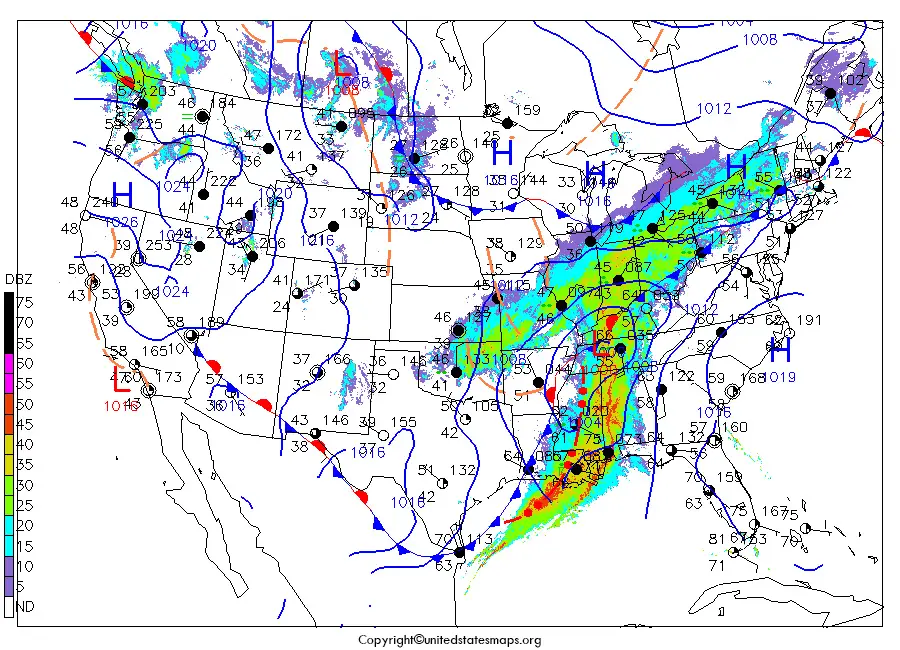
Surface Weather Map of USA
The surface weather map are used to provide data about the weather prediction at a specific time based on ground based weather station. The below image explains H for high pressure with clear sky and warm weather whereas L represents low pressure with cold weather. Surface weather map indicates the weather of a particular area above the surface level. The map can printed from the below given image.
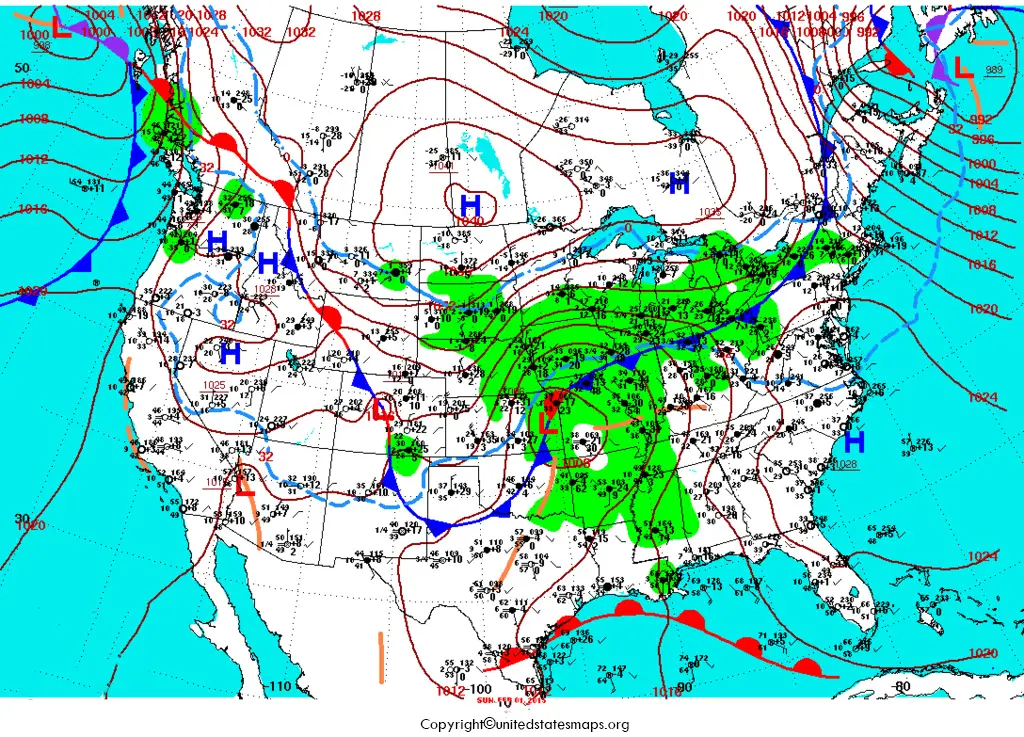
There are many other maps available on the site. The surface weather maps are helpful to the forecast audience as well to predict the weather and prepare people prior to any circumstances. The weather maps can be helpful in saving lives if there is any red alert. The weather forecast of the state helps in telling people about the further weather scenarios and can take care of themselves if there is any red alert announced.
US Surface Weather Map printable
The surface weather map can predict the weather and the color in the image shows rain , ice and snow levels. The green color shows the rain levels, the purple one shows ice and the blue one shows snow. The United state comprises of 50 states and every state has different weather conditions and the surface weather maps helps in the weather prediction and alerts people prior to any circumstances.
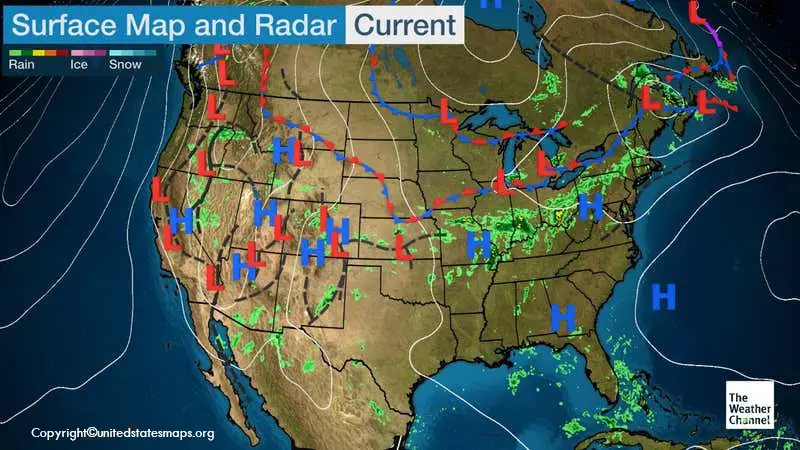
Surface weather analysis are special type of weather maps which provides information of a particular area at a specific time based on the ground based weather stations. Weather maps are created by plotting isobars and checking the sea level pressure, temperature and other climatic conditions. Surface weather maps also shows the levels of precipitation with high pressure and low pressure areas.
Surface Weather Map of US in Pdf
The H in the image indicate the high level of pressure with clear skies and Lin the image indicate low pressure accompanied by precipitation. The surface weather maps can predict the cyclones, tornadoes and prepare the state for any future coming circumstances and helps them to prepare themselves prior to any problem.
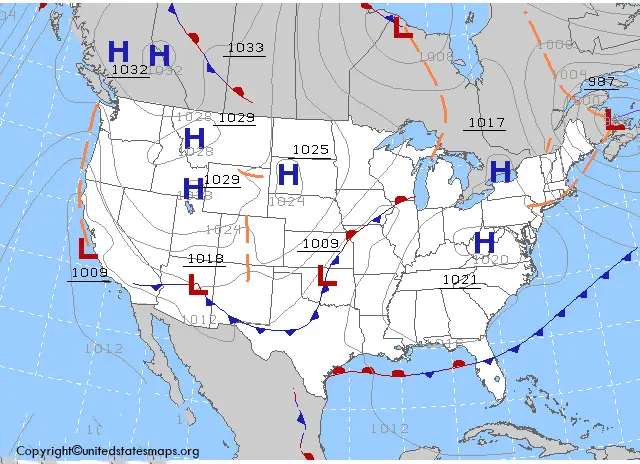
A US Surface Weather Map is a meteorological map that shows current atmospheric conditions across the United States. It helps users understand air pressure, fronts, temperatures, wind, precipitation, and weather systems at or near the Earth’s surface.
What Is a US Surface Weather Map?
- A surface weather map USA displays weather observations collected from stations across the country.
- It provides a snapshot of atmospheric conditions at a particular time.
- Weather maps commonly show high-pressure and low-pressure systems.
- They identify warm fronts, cold fronts, stationary fronts, and occluded fronts.
- Temperature, wind direction, wind speed, cloud cover, and precipitation may also be displayed.
- Meteorologists use these maps to analyze current weather and identify developing weather patterns.
🌡️ Temperature Information
A US surface weather map can provide information about temperatures across different regions.
- Shows areas experiencing warmer or colder conditions.
- Helps identify temperature gradients.
- Can highlight unusually warm or cold air masses.
- Temperature observations may be shown using numbers or color shading.
- Useful for comparing conditions between different states and regions.
💨 Wind Patterns
Wind is another important element of a surface weather analysis map.
- Wind direction indicates where air is moving.
- Wind speed can be represented using wind barbs or other symbols.
- Strong winds are often associated with pressure gradients and weather systems.
- Meteorologists use wind observations to understand the movement of fronts and storms.
- Wind information is useful for aviation, marine activities, agriculture, and emergency planning.
🔵 High-Pressure Systems
High-pressure areas are commonly marked with the letter H.
- High pressure generally represents sinking air.
- It is often associated with more stable weather conditions.
- Depending on the season and location, high pressure can bring clear skies, lower humidity, or cold conditions.
- The circulation around a high-pressure system differs between the Northern and Southern Hemispheres; in the United States, winds around surface highs generally circulate clockwise.
🔴 Low-Pressure Systems
Low-pressure areas are generally marked with L.
- Low pressure is associated with rising air.
- Clouds and precipitation frequently develop around or near low-pressure systems.
- Strong low-pressure systems can produce significant winds and severe weather.
- The circulation around a surface low in the United States is generally counterclockwise.
Weather Fronts
One of the most useful features of a US surface weather map is its depiction of weather fronts.
Cold Front
- Usually represented by a blue line with triangles.
- Marks the advancing edge of colder air.
- Can produce showers, thunderstorms, and changing winds.
Warm Front
- Usually represented by a red line with semicircles.
- Indicates advancing warmer air.
- May produce widespread clouds and precipitation.
Stationary Front
- Typically shown using alternating red semicircles and blue triangles.
- Indicates a boundary that is moving slowly or remaining relatively stationary.
Occluded Front
- Usually shown with alternating purple triangles and semicircles.
- Forms when a cold front catches up with a warm front.
Precipitation
A US weather map can help users understand where rain, snow, thunderstorms, or other precipitation is occurring.
- Rain areas can be identified using radar or precipitation overlays.
- Snow may be highlighted during winter weather events.
- Thunderstorm activity can be displayed using radar and severe-weather information.
- Precipitation patterns can help identify areas affected by weather fronts.
Storm Systems
Surface weather maps are especially useful for tracking large weather systems.
- Tropical systems and hurricanes can be analyzed alongside surface observations.
- Winter storms can be tracked through pressure patterns and fronts.
- Strong low-pressure systems may indicate potentially hazardous weather.
- Thunderstorm systems can develop along fronts and areas with unstable air.
- Weather professionals combine surface maps with radar, satellite, upper-air observations, and numerical weather models.
Major US Weather Regions
A national surface weather map can show weather conditions across major regions, including:
- Northeast
- Southeast
- Midwest
- Great Plains
- Southwest
- Rocky Mountain region
- Pacific Northwest
- California
- Alaska
- Hawaii
Each region can experience very different weather at the same time.
Geographic Features and Weather
The physical geography of the United States strongly influences weather patterns.
- Rocky Mountains affect air movement and precipitation.
- Great Plains provide a broad area where different air masses can interact.
- Great Lakes influence local temperatures and precipitation.
- Appalachian Mountains affect regional weather.
- Pacific Ocean influences weather along the West Coast.
- Gulf of Mexico provides moisture for many weather systems affecting the central and eastern United States.
How Surface Weather Maps Are Created
Surface weather maps use observations from many sources, including:
- Weather stations
- Airports
- Ships and buoys
- Automated weather observing systems
- Weather satellites
- Radar networks
- Meteorological instruments
- Other observing platforms
These observations are analyzed and plotted to provide a picture of atmospheric conditions across the country.
How to Read a US Surface Weather Map
When looking at a United States surface weather map, check these features:
- H and L symbols – identify high- and low-pressure centers.
- Front lines – show boundaries between different air masses.
- Isobars – connect locations with equal atmospheric pressure.
- Wind symbols – provide wind direction and speed.
- Temperature observations – show local or regional temperatures.
- Precipitation areas – identify rain, snow, and other precipitation.
- Time stamp – tells you when the observations were valid.
- Legend – explains the symbols and colors used on the map.
Uses of a US Surface Weather Map
- Helps meteorologists analyze current weather conditions.
- Supports short-term weather forecasting.
- Helps identify approaching cold and warm fronts.
- Shows the location of high- and low-pressure systems.
- Helps monitor developing storms.
- Supports aviation weather planning.
- Helps mariners understand wind and pressure patterns.
- Assists emergency managers during severe-weather events.
- Helps farmers monitor weather conditions affecting crops.
- Provides useful information for outdoor and travel planning.
- Helps students learn practical meteorology and geography.
- Allows users to compare weather conditions across different parts of the country.
Surface Weather Map vs. Radar Map
These maps provide different types of information:
| Map Type | Main Information |
|---|---|
| Surface Weather Map | Pressure, fronts, winds, temperatures, weather observations |
| Weather Radar Map | Precipitation intensity and movement |
| Satellite Weather Map | Clouds, atmospheric features, and weather systems |
| Temperature Map | Temperature distribution |
| Wind Map | Wind direction and speed |
| Precipitation Map | Rain and snow distribution |
| Forecast Map | Predicted future weather conditions |
Why the Map’s Time Matters
Weather changes continuously, so the US surface weather map should always be checked with its observation or analysis time.
- Conditions can change within minutes or hours.
- Fronts move across the country.
- Pressure systems develop and weaken.
- Storms can rapidly intensify.
- A map from an earlier time may not represent current conditions.
For this reason, professional weather analysis relies on time-stamped observations and regularly updated maps.
Therefore the US Surface Weather Map is helpful in the state forecast and prepares them for further circumstances. The US Surface weather is available on the site and can be downloaded from the below image and be used for further reference. There are many other maps available on the site and can be printed from the site.